Materia medica
University of Toronto Art Centre (2014)
Elyse Portal
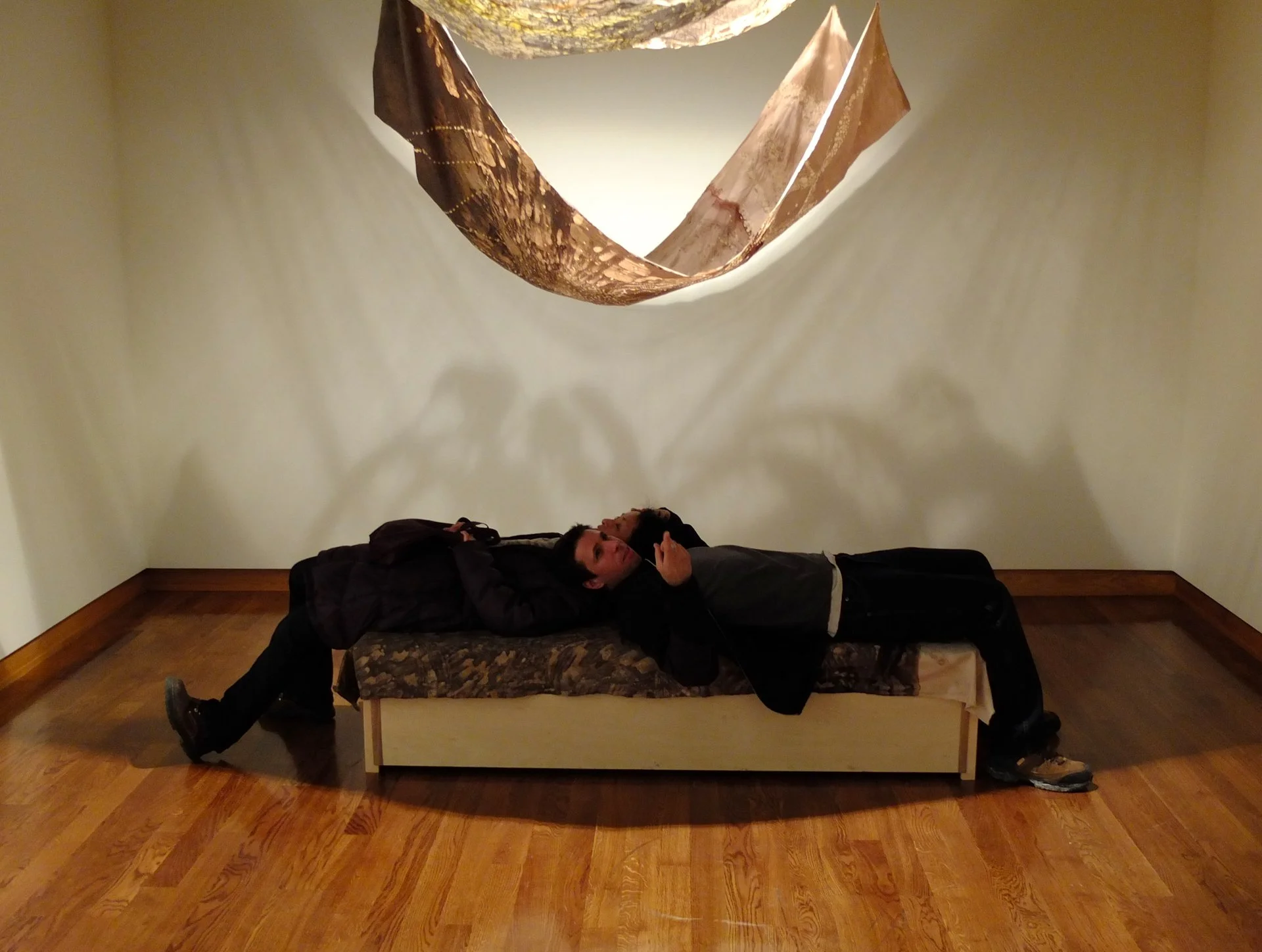
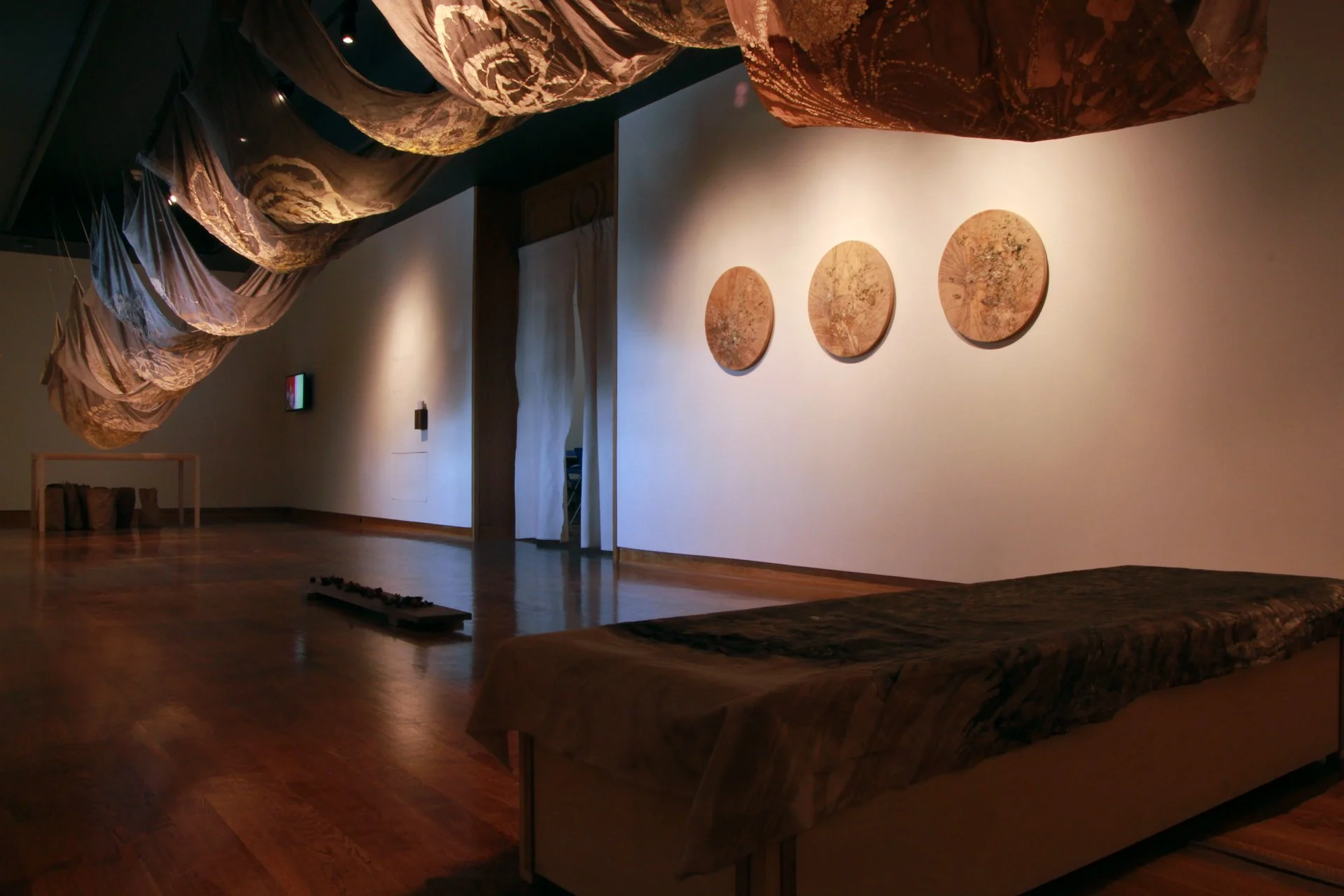
Daylighting is a term given to buried waterways that are uncovered. Materia medica is a body of work and an approach to art making dedicated to urban buried waterways, as a way to daylight their presence through installations formed from pigments, materials + sounds found in their remnant ecosystems.
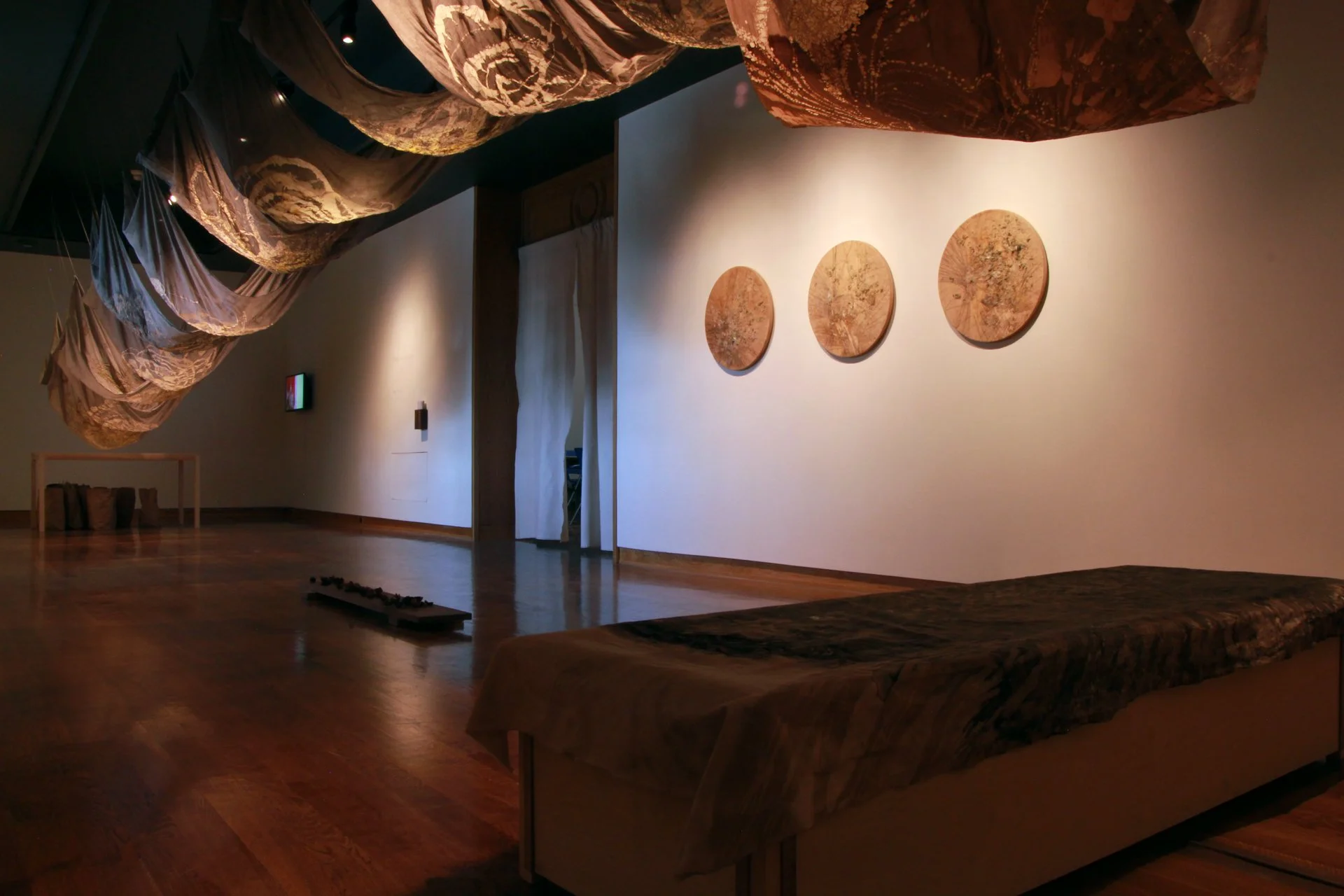
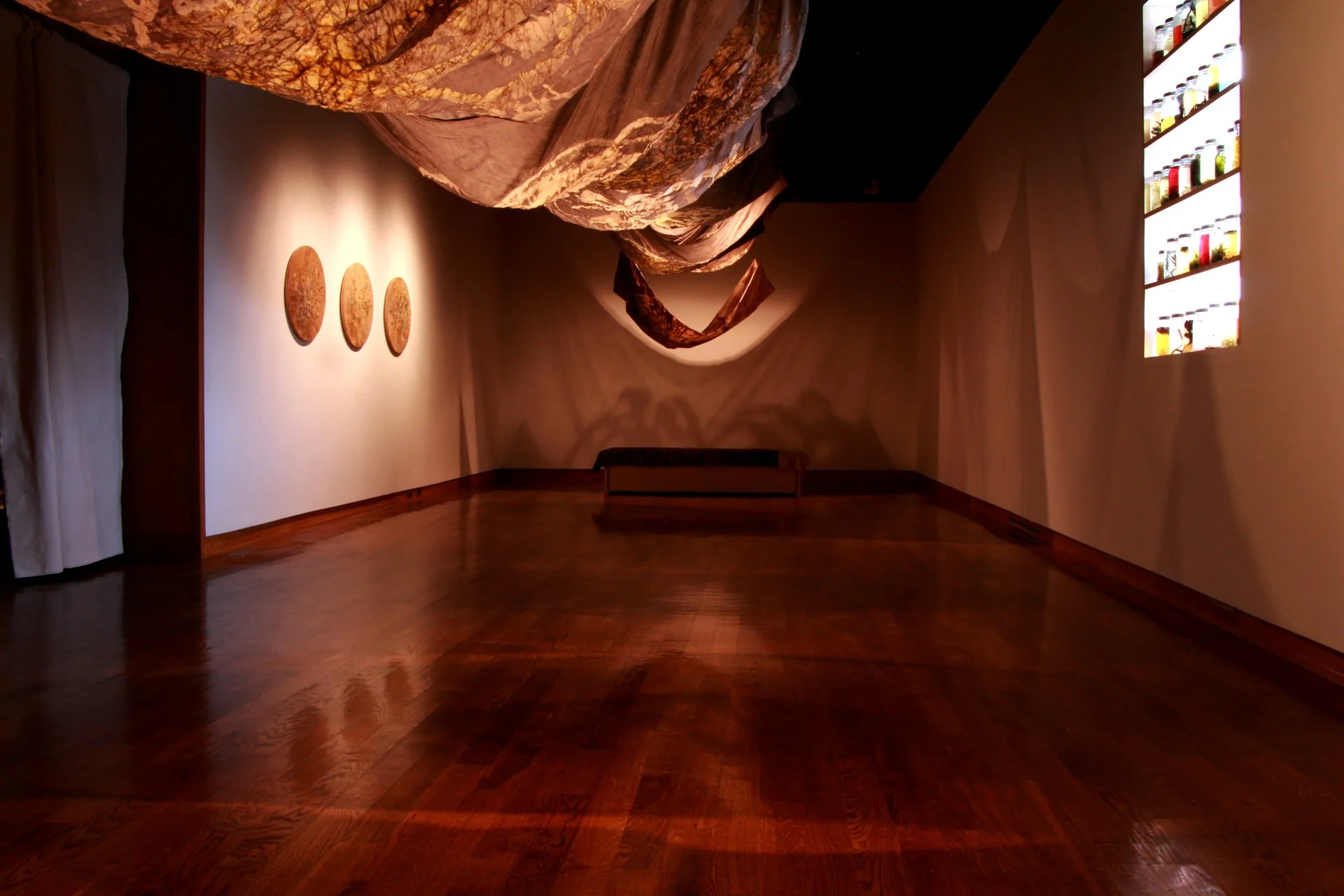
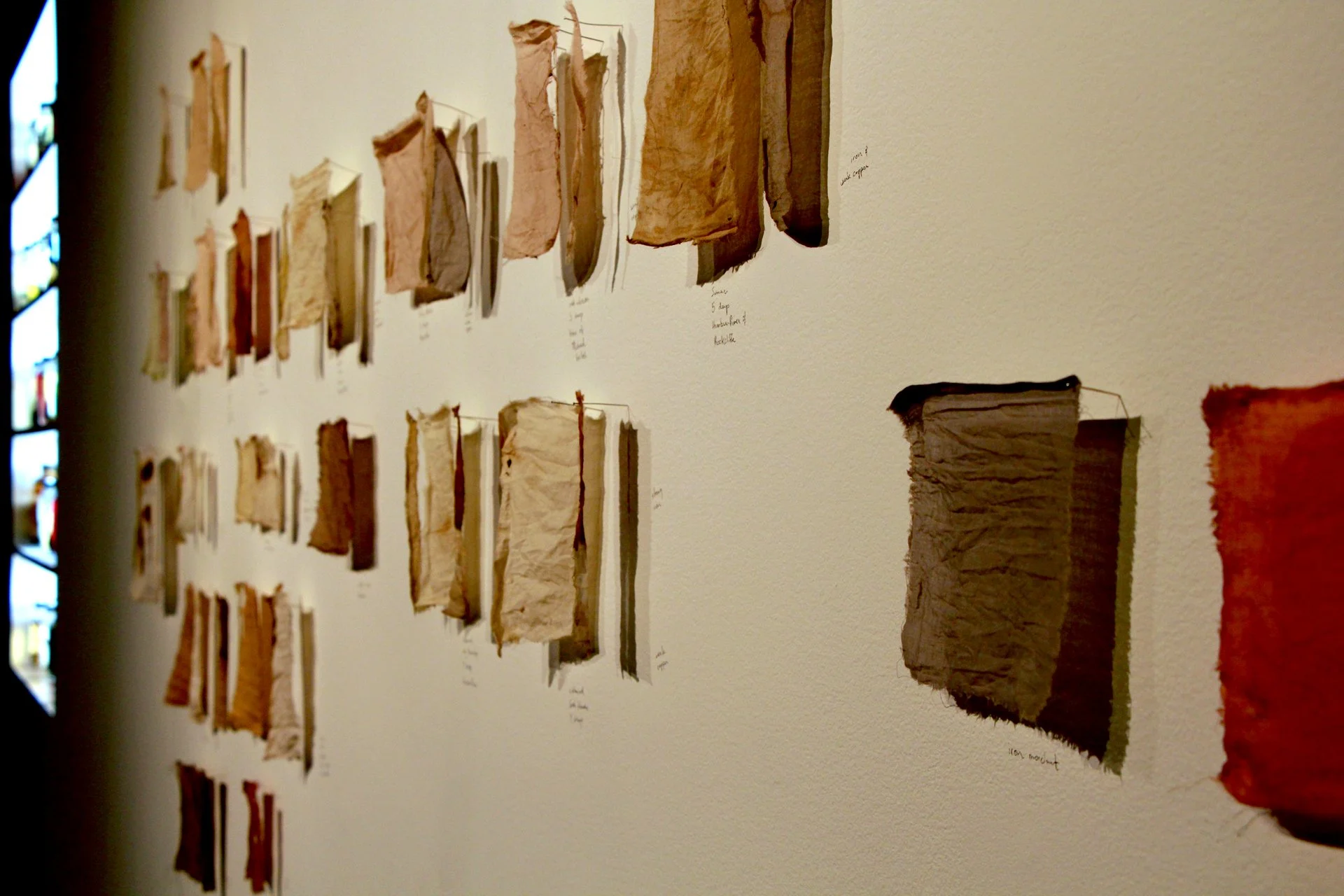
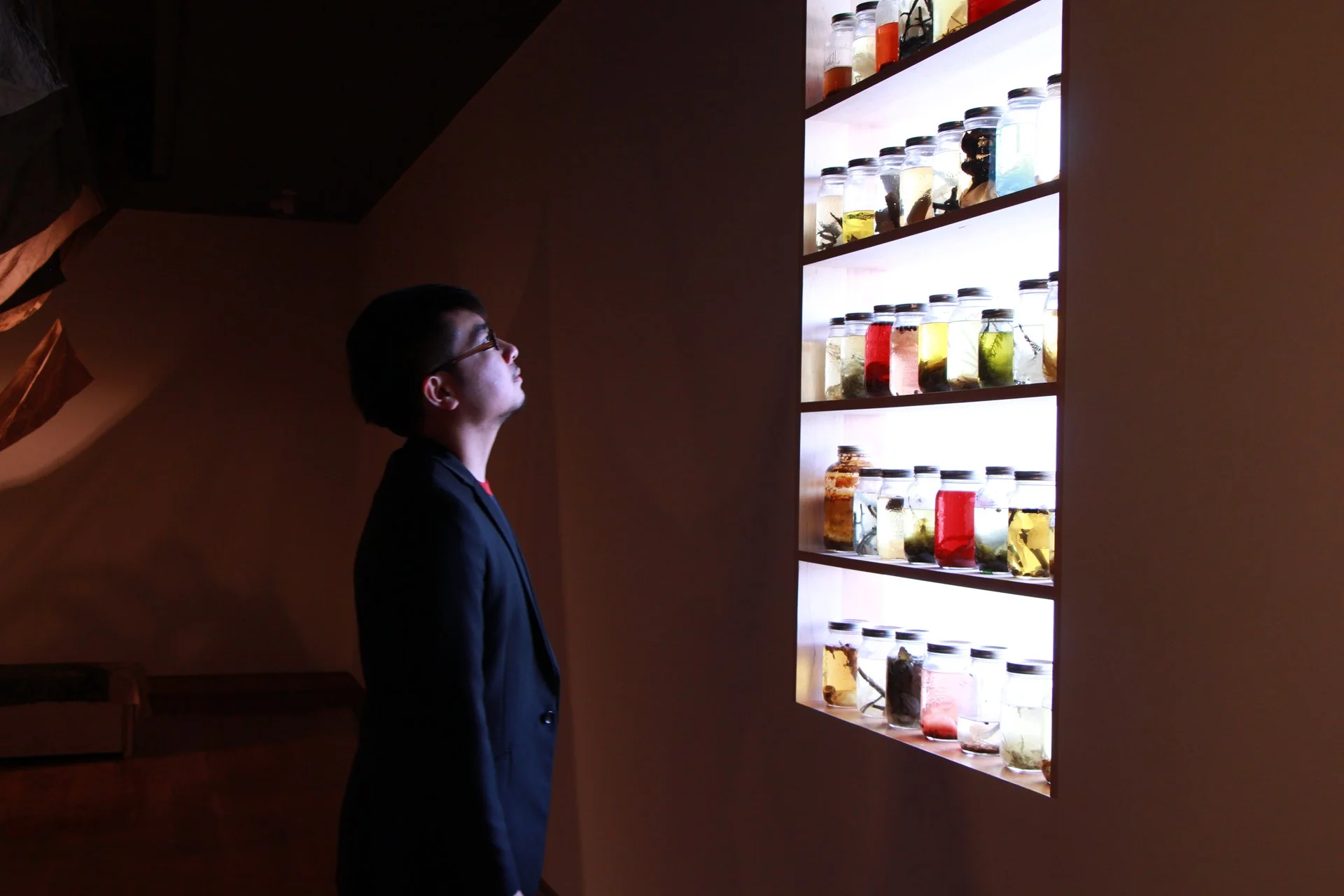
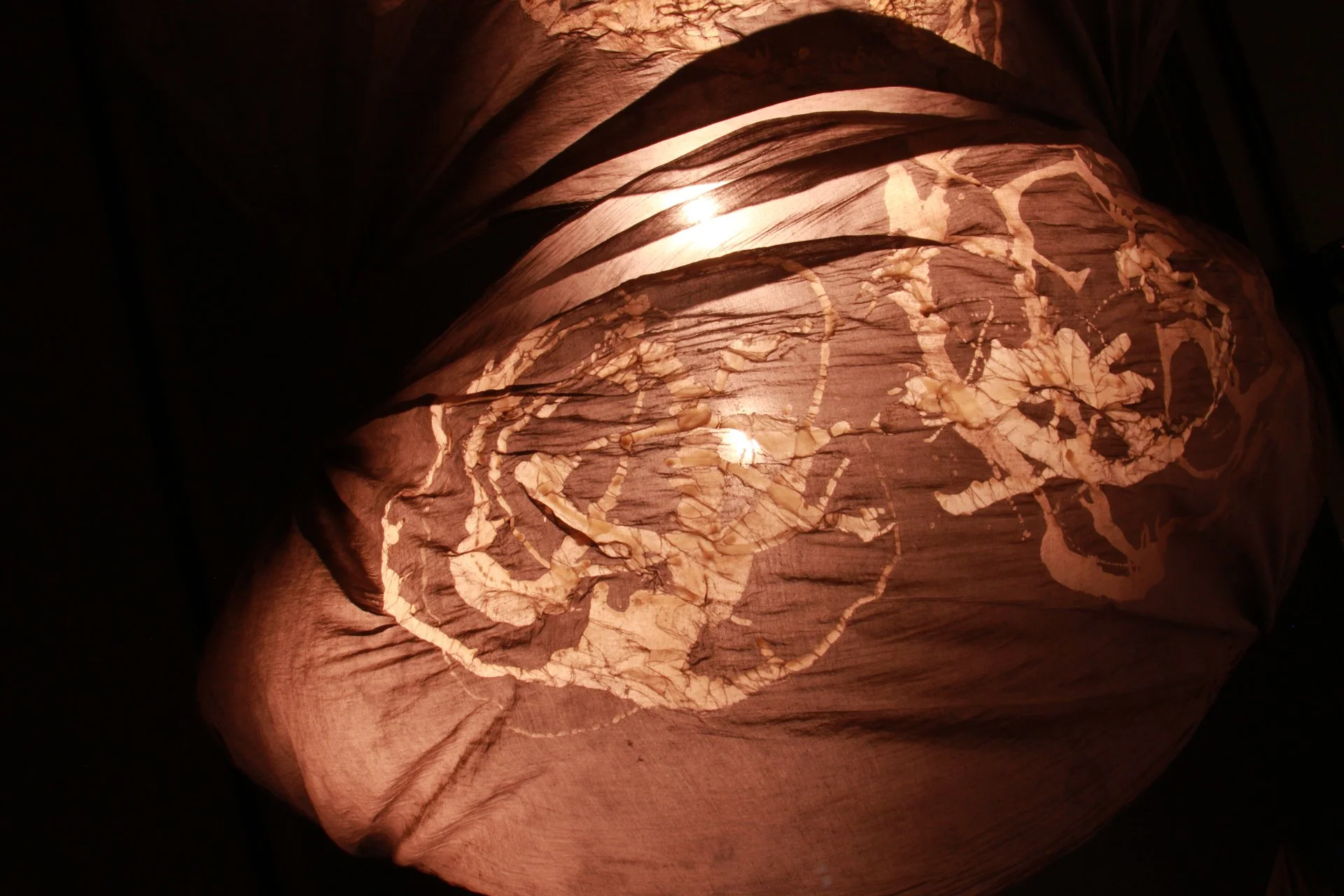
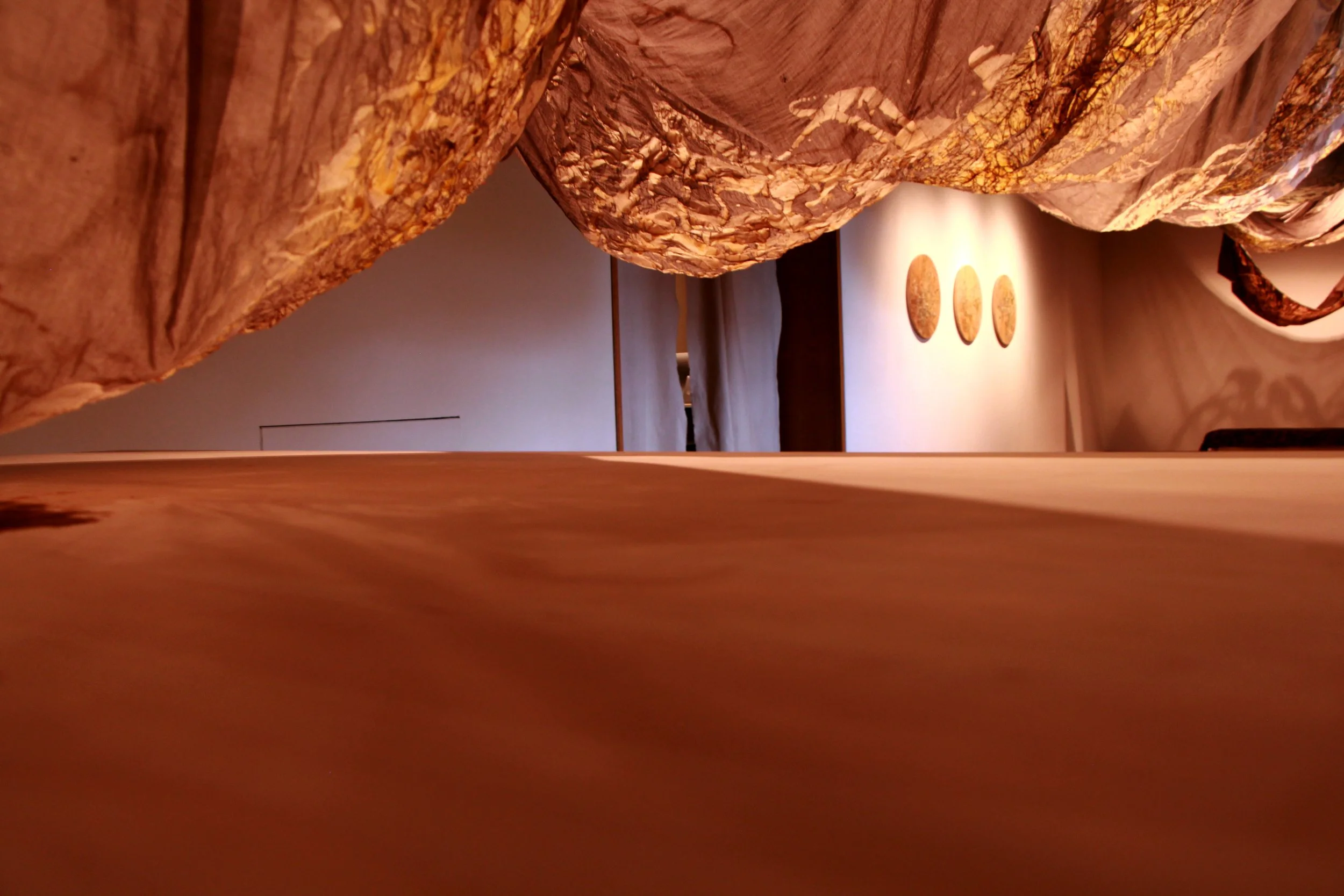
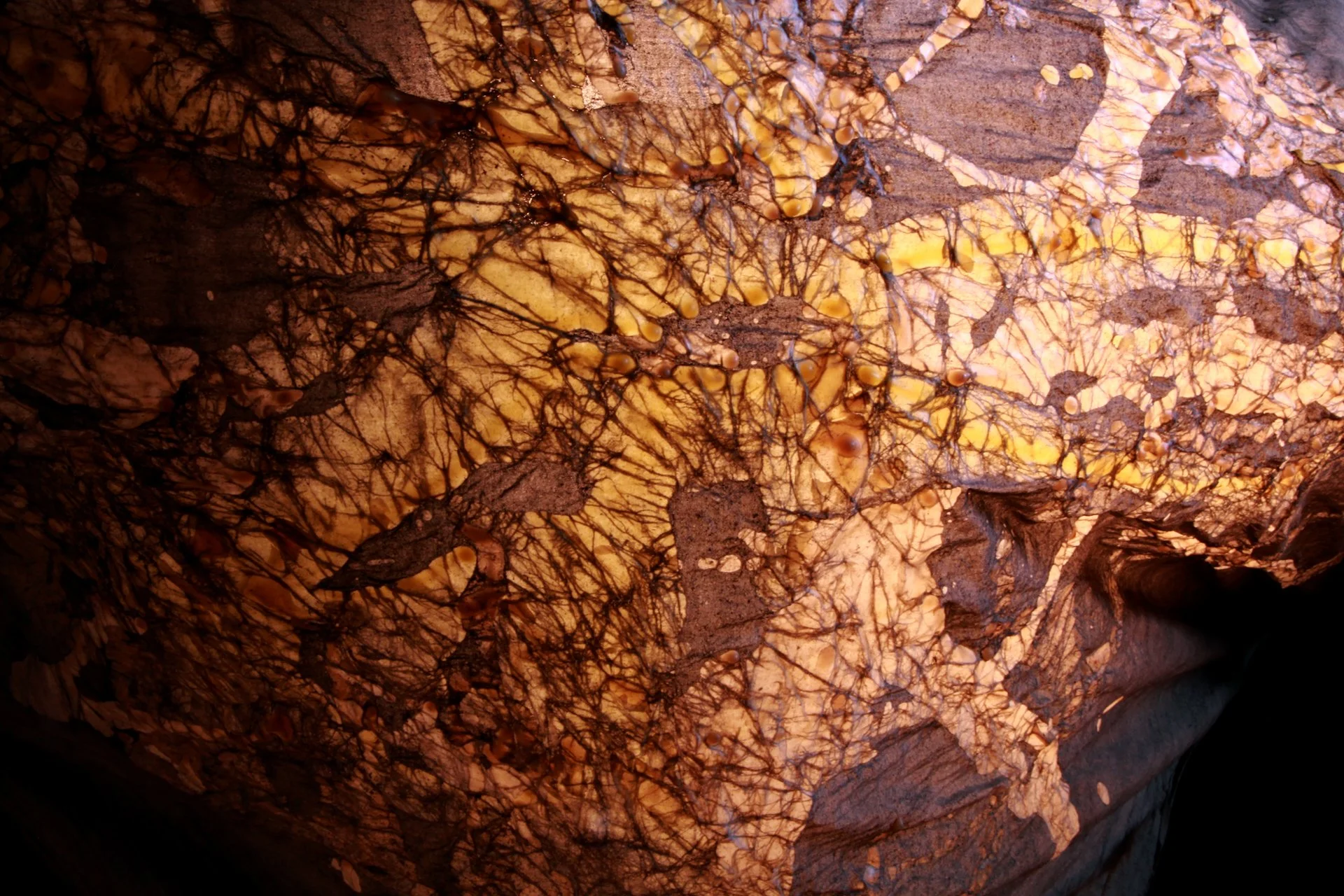
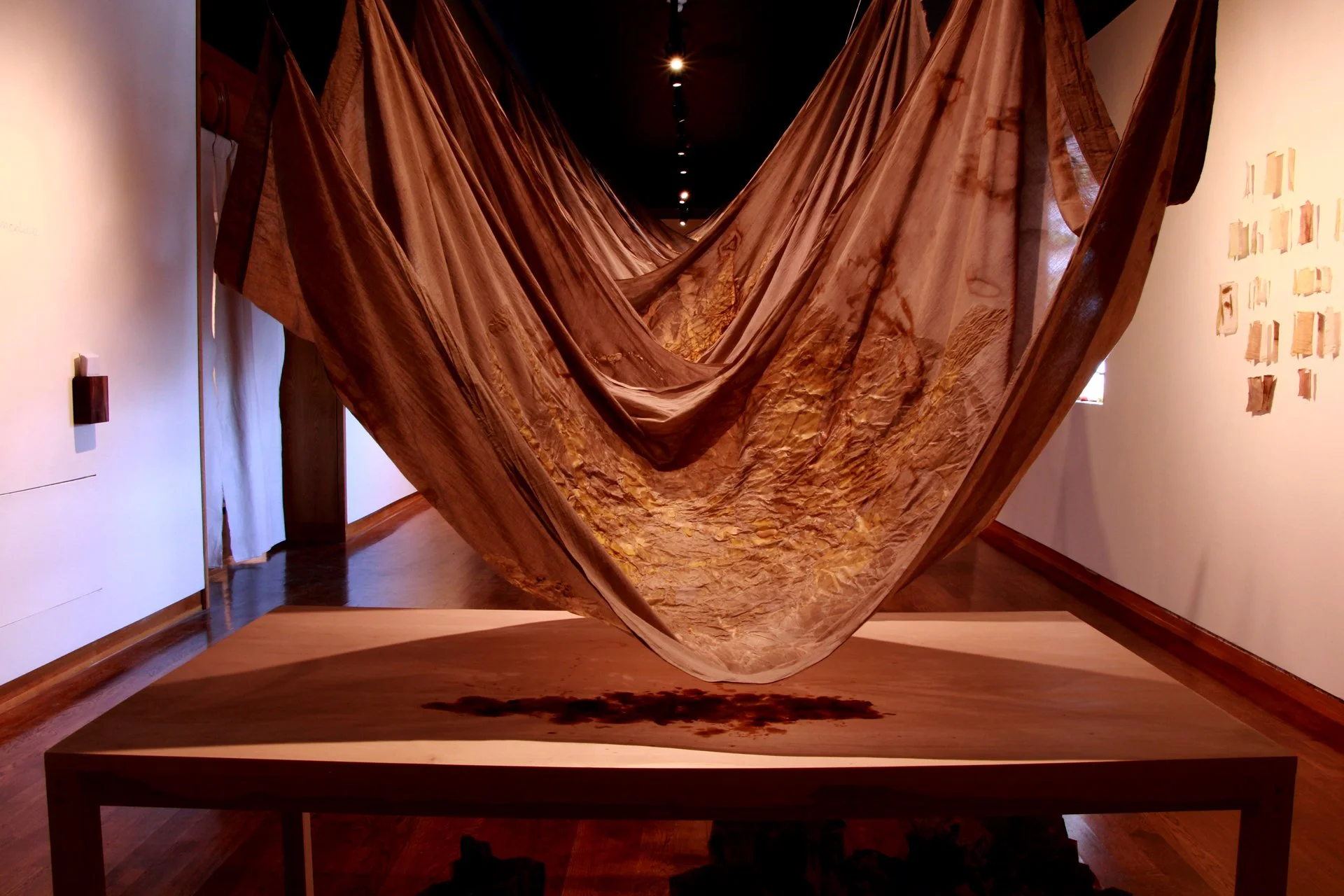
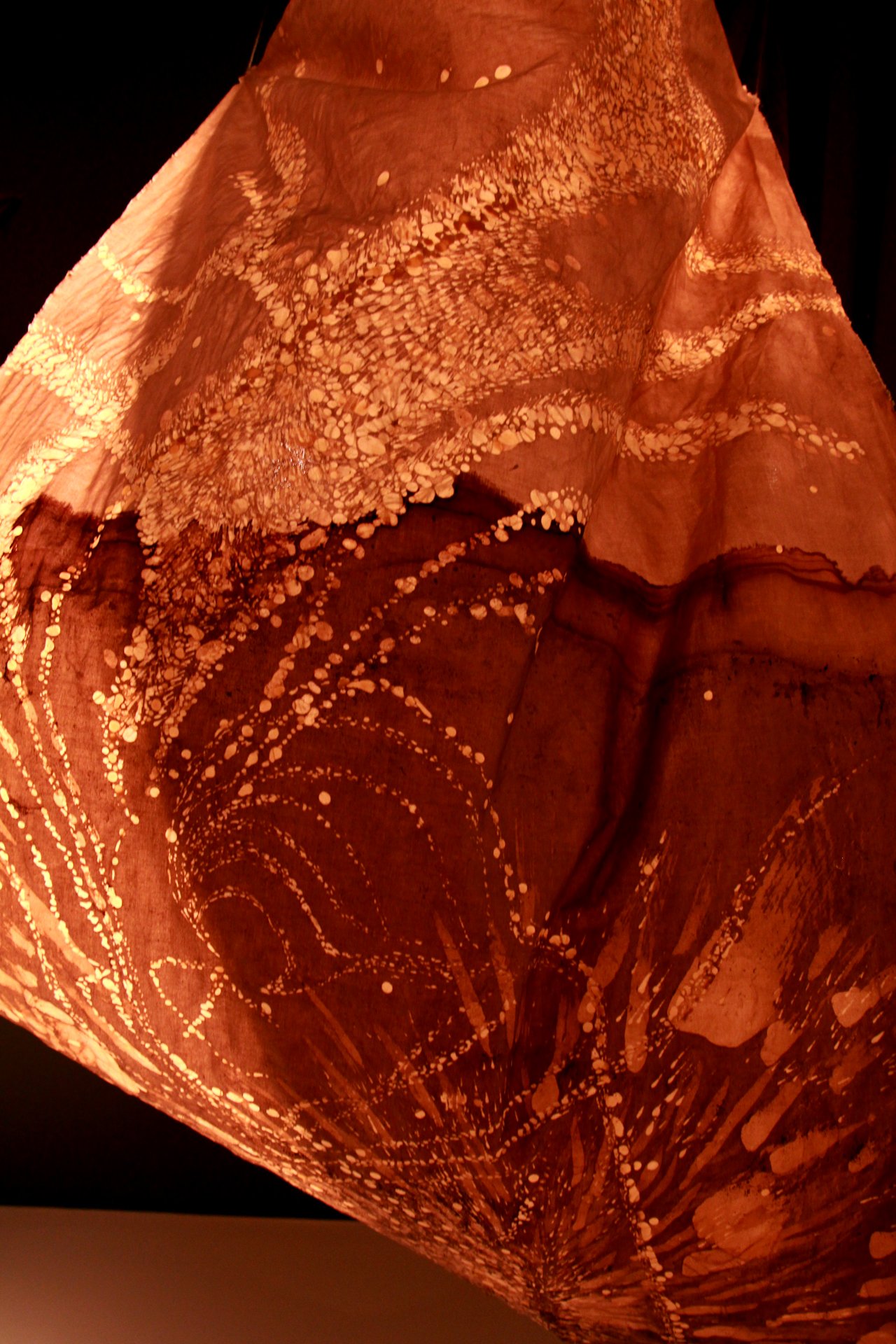
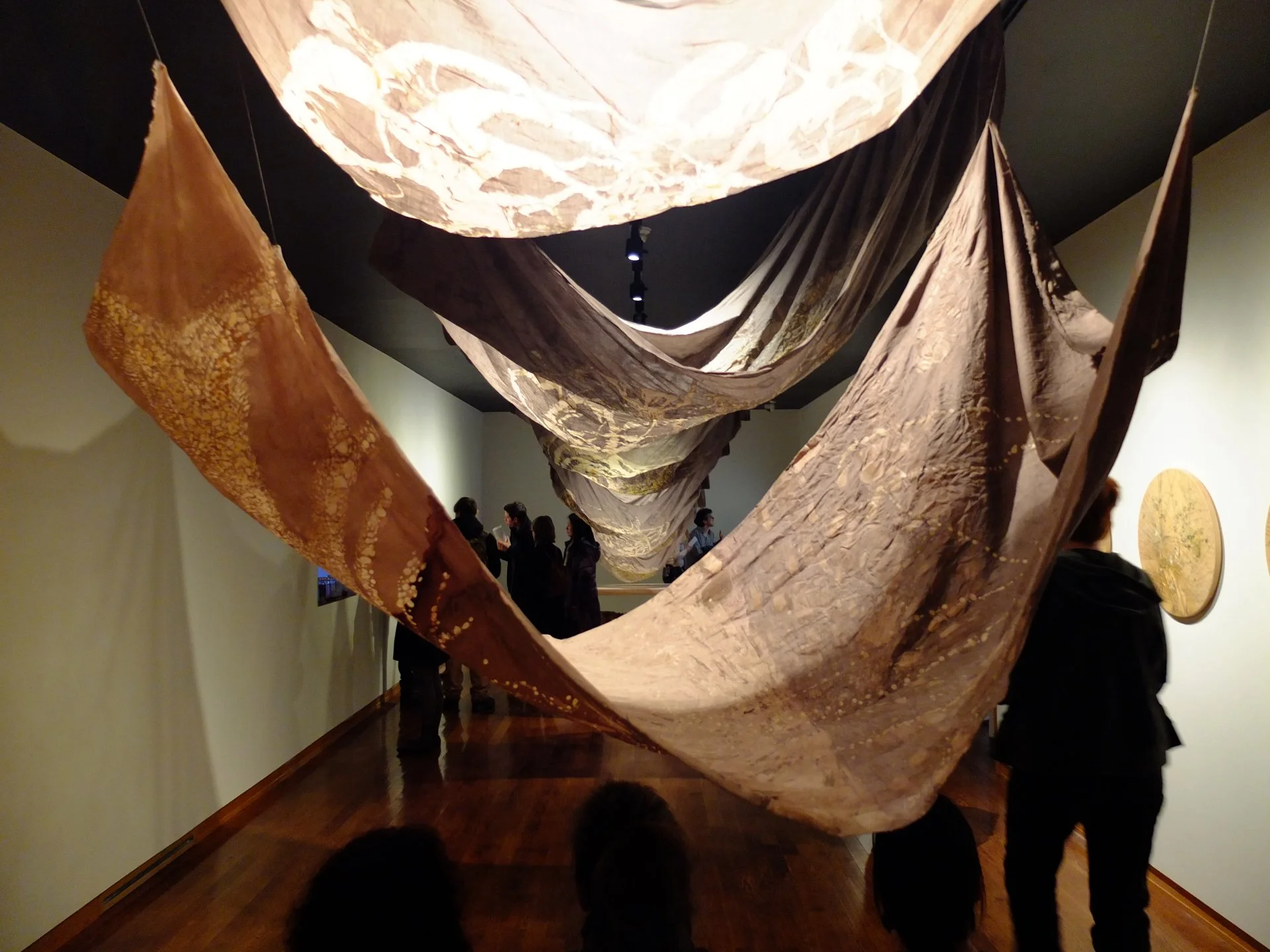
Materia medica combines materials found on everyday walks in + around buried watersheds, together with my interest in a healing technique from my Ukrainian ancestry called wax pouring - vylyvaty visk - an ancient technology where water, wax + conversations with other-than-humans elicit remedial actions for people + practices.
Materia medica: daylighting the sacred
At present, the human scale of development and industrialization is overwhelming and undermining the environment. Relational specificity - a fourth paradigm put forward by Miwon Kwon - is one way to address this predicament. Through relational/intuitive methodologies, the basis for Materia medica - remediation can occur by feeling an embodied connection to the Other. In nurturing relational engagements with the invisible elements that sustain and facilitate life, we can reawaken our perceptions of the natural world.
Materia medica is a response. Here, material processes with local plants embed a kind of awareness of the land. In knowing where and how colours can be grown, cultivated, and extracted sustainably, a certain intimacy with place occurs. And, by using local or organic materials for paintings or installations, fewer chemical inputs to produce a body of artwork are needed. Perhaps akin to chaos theory, these minute or incidental activities can be significant to how social and ecological processes unfold.
Medica or medicine is about healing that begins with relational activities. Healing is a process of relational exchange that initiates a movement toward balance…
Materia medica acknowledges that the sacred is an experience of something larger. It is an engaged porousness with the Other: the tree, the wax, the sky, the lake, the tapestry, the buried stream beyond the manhole, the stars. Here, a listening place dissolves the duality of the observer and the observed, and things intertwine.
Materia medica was published in Simon Fraser University’s Comparative Media Arts Journal, Issue 2, Territory.
I would like to acknowledge funding support for Materia medica, exhibited at the University of Toronto Arts Centre, from the Social Sciences and Humanities Research Council (SSHRC).